
![[RIGHT]unitar_logo](https://cifal.up.edu.ph/wp-content/uploads/2024/01/RIGHTunitar_logo.png)
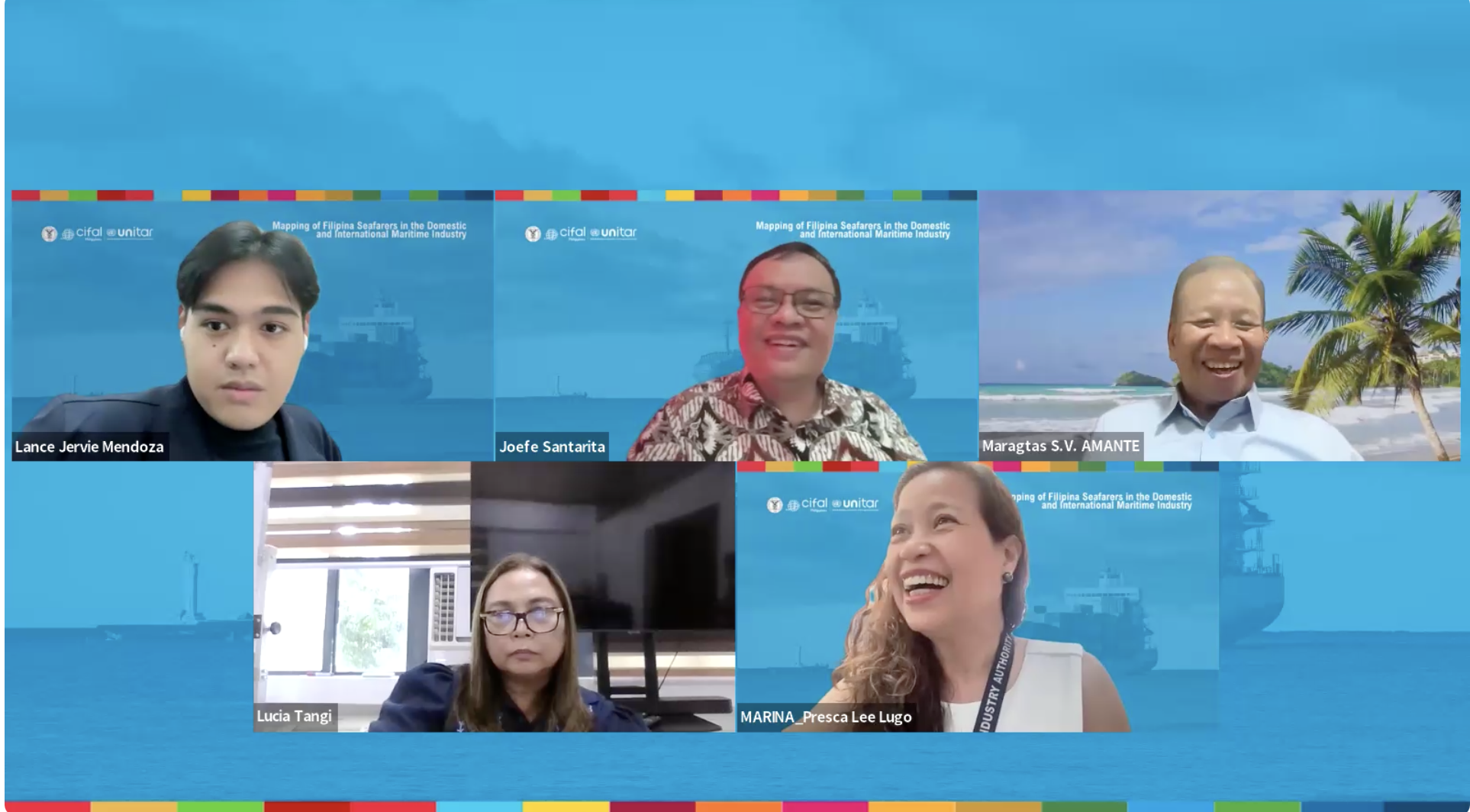
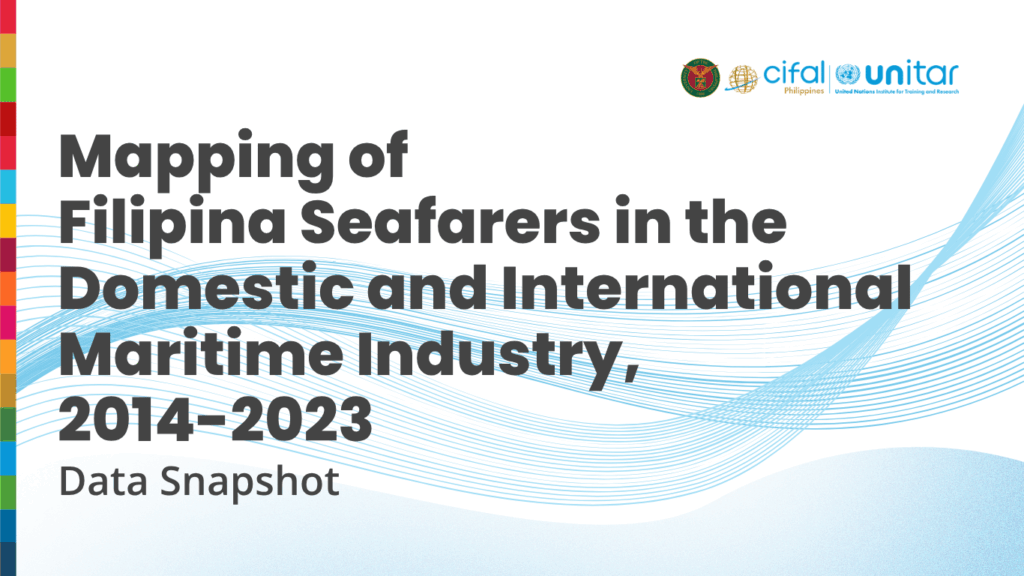
As part of its 10th anniversary webinar series, Conversations for Global Goals, UP-CIFAL Philippines convened maritime experts, policymakers, researchers, and industry stakeholders to examine the status of Filipina seafarers through the presentation of the initial findings of a landmark research project aimed at advancing gender-responsive maritime policies.
The webinar, Mapping of Filipina Seafarers in the Domestic and International Maritime Industry, featured the Phase 1 Data Snapshot of a research project led by Professor Joefe B. Santarita of the University of the Philippines Asian Center. The snapshot provides a comprehensive quantitative assessment of Filipina seafarers, examining their demographic profile, employment patterns, occupational distribution, and representation across the maritime workforce.
In his opening remarks, Alex Mejia, Director of the Division for People and Social Inclusion at the United Nations Institute for Training and Research (UNITAR), emphasized that reliable and disaggregated data are essential to advancing inclusive development. He noted that improving the visibility of women in the maritime sector through evidence-based research supports the achievement of Sustainable Development Goals (SDGs) 5 (Gender Equality), 8 (Decent Work and Economic Growth), and 10 (Reduced Inequalities), while helping ensure that underrepresented groups are reflected in policies and decision-making processes.
Dr. Santarita presented findings showing that despite the Philippines’ longstanding position as one of the world’s leading suppliers of seafarers, women continue to comprise only a small proportion of the maritime workforce. The study found that Filipina seafarers account for just over six percent of deployed Filipino seafarers globally, with the majority employed in hospitality, catering, and passenger service roles, while representation in technical and senior leadership positions remains limited.
Drawing from administrative data and preliminary interviews with women seafarers, the research also identified persistent challenges confronting Filipinas in the industry. These include gender bias and workplace discrimination, inadequate gender-responsive facilities onboard vessels, limited opportunities for career advancement, and the continuing difficulty of balancing maritime careers with family responsibilities.
To help address these challenges, the study recommended strengthening anti-harassment policies, improving shipboard facilities for women, expanding pathways for women to enter technical and leadership positions, enhancing mentorship and professional support networks, and modernizing maritime data systems to better inform policymaking.
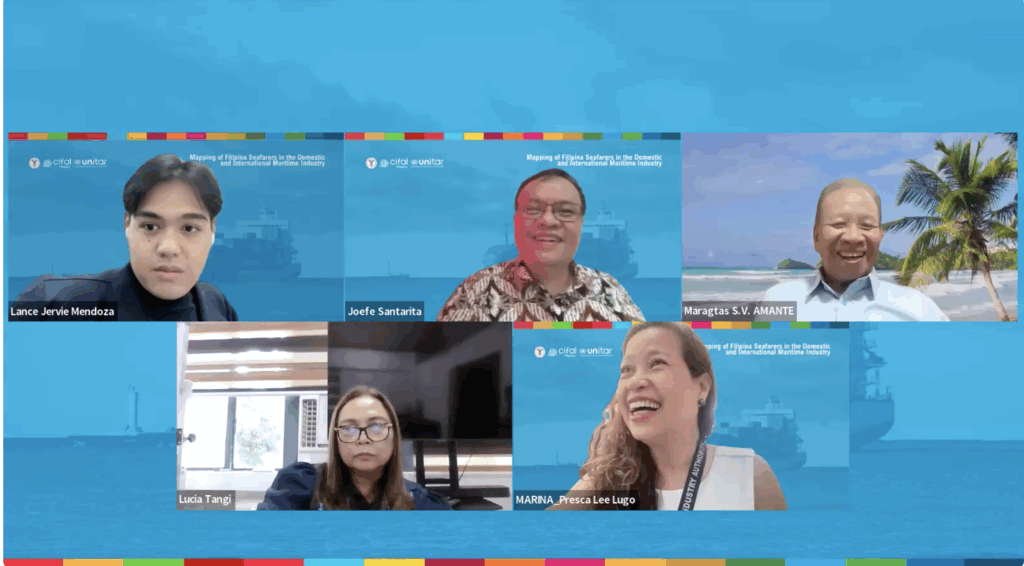
The presentation was followed by a reaction panel featuring Dr. Lucia Palpal-latoc Tangi, Maritime Industry Authority (MARINA) Maritime Education and Training Standards Supervisor Presca Lee Lugo, and labor scholar Dr. Maragtas SV Amante. The panelists underscored the importance of complementing quantitative data with gender and labor perspectives, strengthening institutional support for women seafarers, and translating research findings into concrete policy reforms that promote equity and inclusion across the maritime sector.
Through Conversations for Global Goals, UP-CIFAL Philippines continues to provide a platform for dialogue on pressing sustainable development issues while fostering collaboration among government, academia, industry, and civil society. The webinar reaffirmed the Centre’s commitment to advancing research-informed discussions and evidence-based policymaking that contribute to more inclusive maritime governance and greater opportunities for women in the industry.
The data snapshot is available at the UP-CIFAL Philippines website: https://cifal.up.edu.ph/research-2/mapping-of-filipina-seafarers-in-the-domestic-and-international-maritime-industry-2014-2023/
The webinar may also be viewed on our YouTube channel: https://youtu.be/QGiALA7Qo_A